
Gum Recession Treatment in Seoul
Receding gums expose root surfaces, cause sensitivity and make teeth look longer. We find out why it is happening first, then choose between cleaning, bonding or gum grafting.
- Since 2002
- 13 dentists
- In-house lab
- EN · 中文 · 日本語
Can receding gums be fixed?
Receding gums do not grow back on their own, but recession can be stopped and often partly covered. At Gangnam One Day Dental Clinic, the periodontics team first treats the cause, such as gum disease, hard brushing or grinding. Mild cases are managed with desensitising or bonding; deeper recession may need a gum graft to cover the exposed root.
Reviewed by Dr. Kim Jin-hwan , Chief Director · Updated October 5, 2026
Why gums recede
Gum recession is when the gum margin moves away from the tooth and exposes part of the root. The root is not covered by enamel, so it feels sensitive and is more prone to decay and notching.
Treatment only lasts if the cause is controlled. The dentist checks for active gum disease, brushing habits, bite forces and tooth position before recommending any procedure. If inflammation is present, periodontal treatment comes first.
- Gum disease and tartar build-up
- Brushing too hard or with a hard-bristled brush
- Thin gum tissue (often inherited)
- Teeth grinding and heavy bite forces
- Teeth positioned outside the bone, sometimes after orthodontics
- Smoking, trauma and age-related changes
Treatment options from simple to surgical
Not every receding gum needs surgery. Small, stable recession with mild sensitivity is often managed with professional cleaning, a softer brushing technique and desensitising treatment.
Where the root surface is notched, tooth-coloured composite bonding can restore the shape and reduce sensitivity. Where recession is progressing, the gum is very thin or the root exposure is cosmetically visible, a gum graft is usually recommended to add tissue thickness and cover part of the root.
Not sure if this is right for you? Send a photo or X-ray — a dentist replies on WhatsApp in English, Chinese or Japanese.
Get a free opinionWhat a gum graft involves
In a connective tissue graft, a thin layer of tissue is usually taken from the palate and placed under the gum at the recession site, then stitched. In some cases a substitute graft material is used instead.
Stitches are typically removed after 1–2 weeks. The gum looks settled within a few weeks, but tissue continues to mature for 2–3 months. How much root coverage is possible depends on the bone level between the teeth, which the dentist assesses on X-rays before surgery.
| Desensitising / bonding | Gum graft | |
|---|---|---|
| Best for | Mild, stable recession; sensitivity or notching | Progressing or deep recession; thin gums |
| Covers the root | No, protects the surface | Often partly or fully |
| Visits | Usually 1 | Usually 2–3 including stitch removal |
| Anaesthesia | Usually none or minimal | Local anaesthetic |
| Recovery | None | Typically 1–2 weeks of soft diet |
| Adds gum thickness | No | Yes |
How it works at Oneday Dental
- Before you travel
Send close-up photos
Send gum photos and recent X-rays on WhatsApp. The team can say whether simple care or a graft is likely.
- Visit 1
Examination and cause check
Recession depth, gum thickness, pockets and bite are measured. X-rays show the bone between teeth, which predicts how much coverage is possible.
- Visit 1–2
Control the cause
Cleaning or deep cleaning, brushing advice and, if needed, a night guard for grinding are arranged before any surgery.
- Graft day
Gum graft under local anaesthetic
Tissue is placed and stitched at the recession site. Most single-site grafts take about 1–2 hours.
- 1–2 weeks later
Stitch removal and review
Healing is checked and stitches removed. Final results are assessed after about 2–3 months.
Things to know before you decide
- Full root coverage is not always possible, especially where bone between the teeth has already been lost.
- The palate donor site is usually sore for about a week.
- Smokers and patients with uncontrolled gum disease have lower graft success and may be advised to delay surgery.
- If the cause, such as hard brushing or grinding, is not corrected, recession can return.
Experience you can check
- 2002Founded in Gangnam — 24 years
- 13Dentists in 5 departments
- 3Clinic buildings, 1,570 m²
- 0.01 mmT-Scan bite-force detail
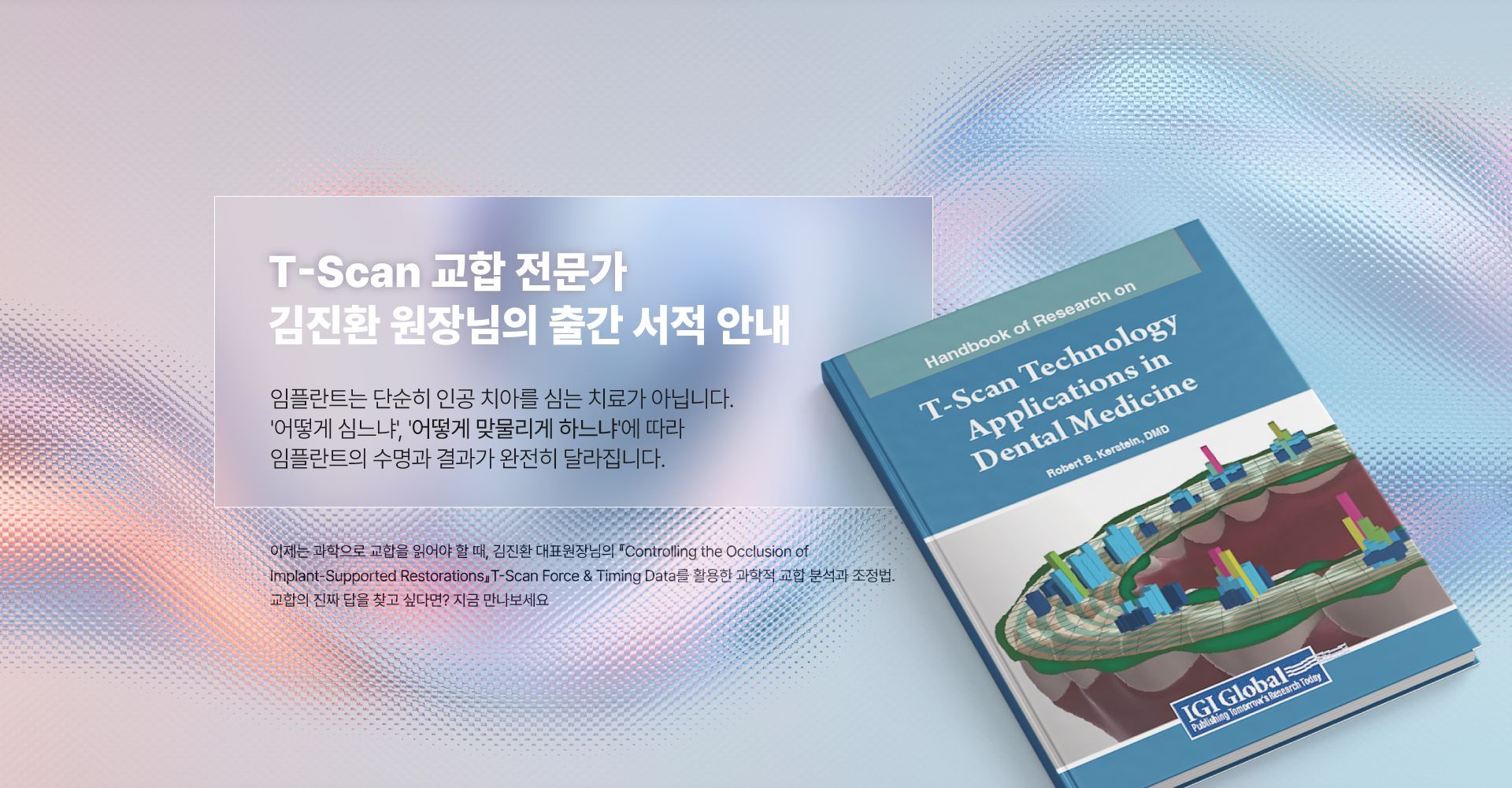
Vice President, Korean Academy of Stomatognathic Function & Occlusion · author on T-Scan implant occlusion (IGI Global)
Gum Recession: common questions
Will my receding gums grow back naturally?
Is gum grafting painful?
How long do I need to stay in Seoul for a gum graft?
Why are my teeth so sensitive near the gumline?
Can a laser treat gum recession?
How much does gum recession treatment cost?
You may also want to read
Periodontics & Gum Care
Periodontics in Seoul: gum disease diagnosis, scaling and root planing, laser and recession care by two periodontists…
Learn more →Laser Gum Treatment
Laser gum treatment in Seoul with a water-drop (Waterlase-type) laser to support deep cleaning of inflamed pockets…
Learn more →Sensitive Teeth
Sensitive teeth treatment in Seoul: find the cause first, from gum recession to grinding, then fluoride, bonding…
Learn more →Dental Cleaning
Dental cleaning in Seoul: scaling, polishing and gum check in one visit in Gangnam, with English, Chinese…
Learn more →Composite Bonding
Composite bonding in Seoul for chips, small gaps and uneven edges, usually in one visit with little or no drilling.
Learn more →Teeth Grinding & TMJ
Teeth grinding treatment in Seoul: T-Scan bite analysis, TMJ assessment and custom night guards led by an occlusion…
Learn more →Browse: Dental Implants · Cosmetic Dentistry · Orthodontics · Gum Care · General Dentistry · International Patients · Home
Get a dentist's opinion on WhatsApp
Send your question, photos or X-ray. We reply with a plan, timeline and estimate in English, Chinese, Japanese or Korean.