
Teeth Grinding Treatment in Seoul
Bruxism care that starts with measuring your bite. T-Scan digital occlusion analysis, jaw-joint assessment and a custom night guard, led by Chief Director Dr. Kim Jin-hwan.
- Since 2002
- 13 dentists
- In-house lab
- EN · 中文 · 日本語
How is teeth grinding treated?
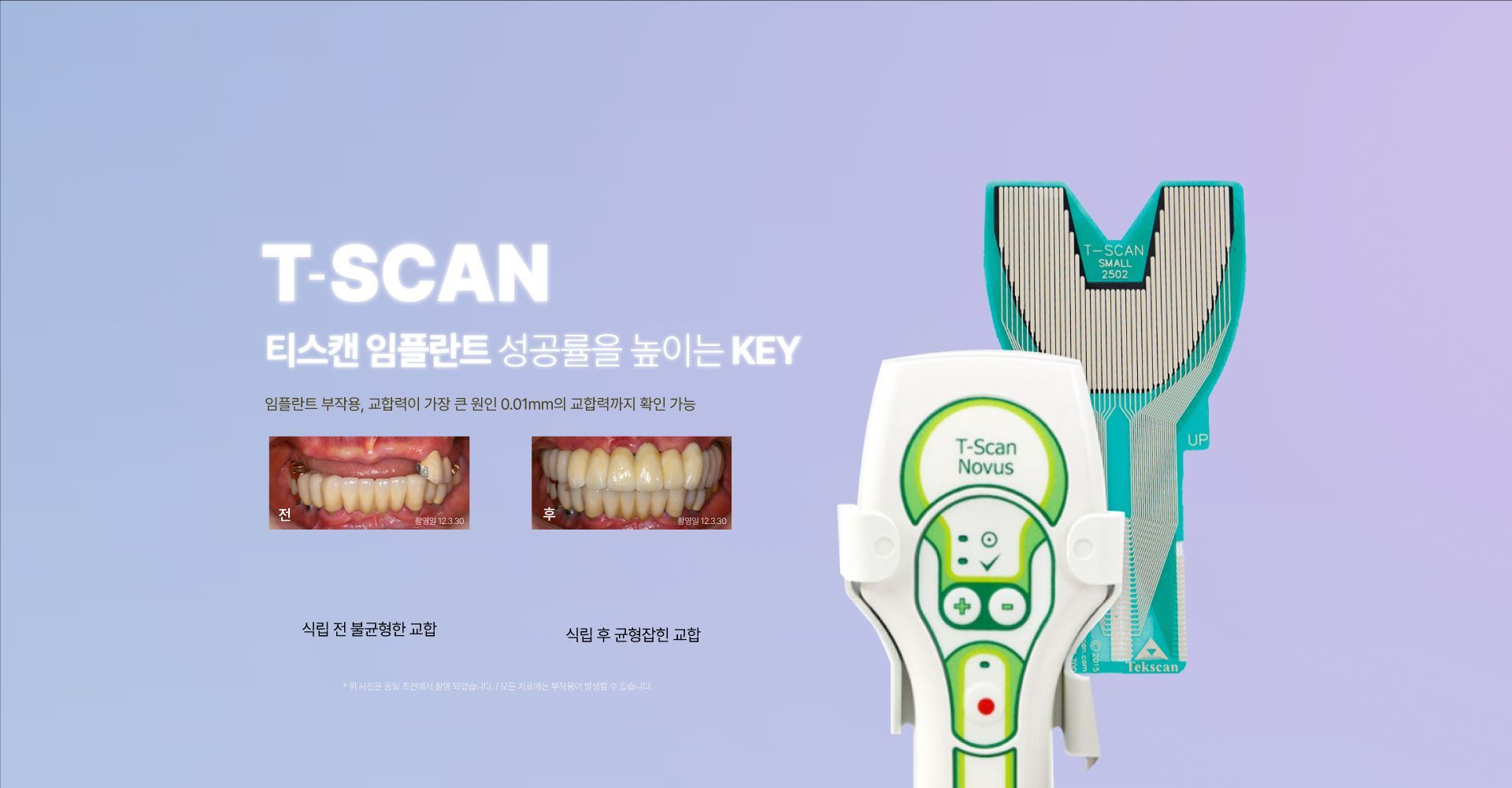
Teeth grinding (bruxism) is usually managed rather than cured: a custom night guard protects the teeth, bite problems are measured and corrected, and stress, sleep and jaw-muscle habits are addressed. At Gangnam One Day Dental Clinic the bite is analysed with T-Scan Novus, which records the timing and force of each tooth contact, so adjustments are based on measurements rather than guesswork.
Reviewed by Dr. Kim Jin-hwan , Chief Director · Updated October 5, 2026
Signs you may be grinding or clenching
Most grinding happens during sleep, so many people only find out when a partner hears it or a dentist sees the wear. Clenching during the day, often while concentrating, is just as common and can be completely silent.
Over time, grinding flattens and chips teeth, cracks fillings and crowns, and overloads the jaw muscles and joints. It is a common hidden cause of sensitive teeth and of implant or crown failures.
- Flat, shiny or chipped biting edges
- Jaw tightness or pain on waking
- Morning headaches around the temples
- Clicking, popping or locking of the jaw joint
- Cracked teeth or repeatedly broken fillings and crowns
- Scalloped edges on the tongue or a ridge inside the cheek
Measuring the bite with T-Scan
When teeth meet unevenly, a few teeth take most of the force and the jaw muscles work harder. Paper marks show where teeth touch but not how hard or in what order. T-Scan Novus records each contact digitally, showing force distribution and timing, so the dentist can see which contacts are overloaded.
Chief Director Dr. Kim Jin-hwan focuses on occlusion and TMJ. He is Vice President of the Korean Academy of Stomatognathic Function and Occlusion (2026–2027) and wrote the chapter on controlling the occlusion of implant-supported restorations in the IGI Global Handbook of Research on T-Scan Technology Applications in Dental Medicine. Bite measurements are also used when fitting implants and crowns, so new teeth are not overloaded.
Not sure if this is right for you? Send a photo or X-ray — a dentist replies on WhatsApp in English, Chinese or Japanese.
Get a free opinionTreatment: protect, balance, reduce
Protect: a custom night guard spreads force and stops tooth-on-tooth wear. See mouth guards for the types and how they compare.
Balance: if T-Scan shows a few teeth taking excess load, small, measured adjustments or restorations can even out the bite. Worn or broken teeth can be rebuilt with bonding, crowns or, where wear is severe, a planned full-mouth reconstruction.
Reduce: jaw stretches, daytime awareness, caffeine and alcohol limits and sleep review help lower muscle activity. If loud snoring or breathing pauses accompany grinding, a sleep assessment may be advised.
| Night guard | Bite adjustment (T-Scan guided) | Restoring worn teeth | |
|---|---|---|---|
| Goal | Protect teeth at night | Even out overloaded contacts | Rebuild lost tooth structure |
| Visits | 2–3 | 1–3 short visits | Depends on number of teeth |
| Reversible | Yes | Minor and measured | No |
| Typical use | Most grinders | Uneven bite on T-Scan | Moderate to severe wear |
How it works at Oneday Dental
- Before visit
Share symptoms
Send photos of your teeth and describe jaw pain, headaches or clicking on WhatsApp.
- Visit 1
Exam and bite analysis
Teeth, muscles and jaw joints are checked and the bite is recorded with T-Scan Novus.
- Visit 1
Scan for the guard
An intraoral scan or impression is taken and the plan is explained.
- Visit 2
Fit and balance
The night guard is fitted and its contacts are adjusted so the bite meets evenly.
- 1–3 months
Review
Wear on the guard, jaw comfort and symptoms are reviewed; further bite work is planned if needed.
Hear it from our dentists
Short answers to real patient questions from the Oneday Dental YouTube channel.
Korean audioThings to know before you decide
- A night guard protects teeth but does not stop the brain from triggering grinding; symptoms can return if it is not worn.
- Bite adjustment removes small amounts of enamel and is not reversible, so it is only done when measurements support it.
- Over-the-counter boil-and-bite guards can fit poorly and, in some people, increase clenching.
- Jaw-joint pain can have causes outside dentistry; referral may be suggested if findings point elsewhere.
- Grinding with loud snoring or breathing pauses may need a sleep assessment before a standard guard is made.
Experience you can check
- 2002Founded in Gangnam — 24 years
- 13Dentists in 5 departments
- 3Clinic buildings, 1,570 m²
- 0.01 mmT-Scan bite-force detail
Vice President, Korean Academy of Stomatognathic Function & Occlusion · author on T-Scan implant occlusion (IGI Global)
Teeth Grinding & TMJ: common questions
Can teeth grinding be cured?
What is T-Scan and why does it matter for grinding?
Why does my jaw hurt every morning?
How much does teeth grinding treatment cost in Seoul?
Can grinding damage dental implants or veneers?
Can I get a night guard during a short trip to Seoul?
You may also want to read
Custom Mouth Guards
Custom mouth guards in Seoul: night guards for grinding and sports guards, made from a digital scan and bite-balanced…
Learn more →Sensitive Teeth
Sensitive teeth treatment in Seoul: find the cause first, from gum recession to grinding, then fluoride, bonding…
Learn more →Snoring & Sleep Apnea
Sleep apnea and snoring care in Seoul with a custom mandibular advancement device fitted by a dentist in Gangnam.
Learn more →Full-Mouth Reconstruction
Full mouth reconstruction in Seoul: implants, crowns and gum care planned together with T-Scan bite analysis and…
Learn more →Dental Crowns
Dental crowns in Gangnam, Seoul: zirconia and all-ceramic crowns milled in our in-house lab, often in one day.
Learn more →Dental Implants
Dental implants in Seoul with OSSTEM or MegaGen, 3D CT planning and an in-house lab in Gangnam since 2002.
Learn more →Browse: Dental Implants · Cosmetic Dentistry · Orthodontics · Gum Care · General Dentistry · International Patients · Home
Get a dentist's opinion on WhatsApp
Send your question, photos or X-ray. We reply with a plan, timeline and estimate in English, Chinese, Japanese or Korean.