
Periodontics in Seoul: Gum Disease Treatment in Gangnam
Bleeding, swollen or receding gums are treatable. Our periodontics department measures your gums, explains the stage of disease, and plans cleaning, deep cleaning or surgery only where it is needed.
- Since 2002
- 13 dentists
- In-house lab
- EN · 中文 · 日本語
What does a periodontist treat?
A periodontist treats the gums and bone that hold teeth in place: gingivitis, periodontitis, bleeding gums, deep pockets, gum recession and loose teeth caused by bone loss. At Gangnam One Day Dental Clinic, periodontics is one of five departments, and treatment usually starts with pocket measurements and X-rays, followed by scaling and root planing before any surgery is considered.
Reviewed by Dr. Kim Jin-hwan , Chief Director · Updated October 5, 2026
Gum disease in stages: from gingivitis to periodontitis
Gum disease starts as gingivitis: plaque at the gumline makes the gums red, swollen and prone to bleeding when you brush. At this stage there is no bone loss and a thorough professional dental cleaning plus better home care usually reverses it.
If plaque hardens into tartar below the gumline, the infection can progress to periodontitis. The gum detaches from the tooth, pockets deepen beyond about 4 mm, and the supporting bone is slowly lost. Teeth may then drift, feel loose or look longer as the gums recede.
- Healthy gum pocket: typically 1–3 mm
- Early to moderate periodontitis: typically 4–6 mm pockets
- Advanced periodontitis: pockets of 6 mm or more, often with mobility
Periodontal treatments we provide
Treatment is matched to the stage of disease. Most patients need non-surgical therapy first. Surgery, gum recession grafting or laser-assisted gum treatment is considered only when pockets or recession persist after healing.
Our periodontics team works alongside the oral surgery, prosthodontics and implant teams in the same clinic, so a patient with failing teeth can have gum stabilisation and later dental implants planned in one place.
- Scaling and polishing for gingivitis and prevention
- Scaling and root planing (deep cleaning) under local anaesthetic
- Periodontal maintenance visits every 3–6 months
- Gum recession treatment, including desensitising, bonding and gum grafting
- Laser-assisted gum treatment with a water-drop (Waterlase-type) laser
- Assessment of bone loss and loose teeth with X-rays and 3D CT
Not sure if this is right for you? Send a photo or X-ray — a dentist replies on WhatsApp in English, Chinese or Japanese.
Get a free opinionWhy gum health comes before implants, veneers or braces
Crowns, veneers, braces and implants all depend on healthy gums and bone. Active gum inflammation increases the risk of bleeding gumlines around veneers, bone loss around implants (peri-implantitis) and faster tooth movement during orthodontics.
For this reason our dentists often stabilise the gums first, then move on to cosmetic or implant work. International patients can send recent X-rays and photos on WhatsApp so the team can say in advance whether gum therapy is likely to be needed before other treatment.
| Gingivitis | Periodontitis | |
|---|---|---|
| Bleeding gums | Common | Common |
| Bone loss | None | Yes, mild to severe |
| Pocket depth | Typically 1–3 mm | Typically 4 mm or more |
| Reversible | Yes, with cleaning and home care | Can be controlled; lost bone rarely regrows fully |
| Usual treatment | Scaling and polishing | Scaling and root planing, then maintenance or surgery |
| Visits | Usually 1 | Usually 2–4, plus re-check |
Explore gum care treatments
Dental Cleaning
Dental cleaning in Seoul: scaling, polishing and gum check in one visit in Gangnam, with English, Chinese…
Learn more →Gum Recession
Gum recession treatment in Seoul: find the cause, then desensitising, bonding or gum grafting by our periodontics…
Learn more →Laser Gum Treatment
Laser gum treatment in Seoul with a water-drop (Waterlase-type) laser to support deep cleaning of inflamed pockets…
Learn more →How it works at Oneday Dental
- Before you travel
Send X-rays and photos
Share recent X-rays, gum photos and your symptoms on WhatsApp. The team replies with what treatment is likely and how many visits to plan for.
- Visit 1
Periodontal examination
Pocket depths are measured around every tooth, bleeding points are recorded and X-rays or 3D CT show the bone level. You receive a stage-based plan.
- Visits 2–4
Deep cleaning
Scaling and root planing under local anaesthetic, usually one or two quadrants per visit, removing tartar and bacteria from root surfaces.
- 4–8 weeks later
Re-evaluation
Pockets are re-measured. Most shallow and moderate pockets improve; persistent deep sites may need laser-assisted or surgical treatment.
- Every 3–6 months
Maintenance
Regular periodontal maintenance cleanings keep bacteria under control. Your home-care routine is adjusted at each visit.
Hear it from our dentists
Short answers to real patient questions from the Oneday Dental YouTube channel.
Korean audioThings to know before you decide
- Gums often shrink slightly after deep cleaning as swelling resolves, which can make teeth look longer or feel more sensitive for a few weeks.
- Bone already lost to periodontitis usually does not regrow fully; treatment aims to stop further loss.
- Smoking and poorly controlled diabetes slow healing and reduce how well pockets respond.
- Teeth with very advanced bone loss and severe mobility may not be saveable; the dentist will discuss extraction and replacement options honestly.
Experience you can check
- 2002Founded in Gangnam — 24 years
- 13Dentists in 5 departments
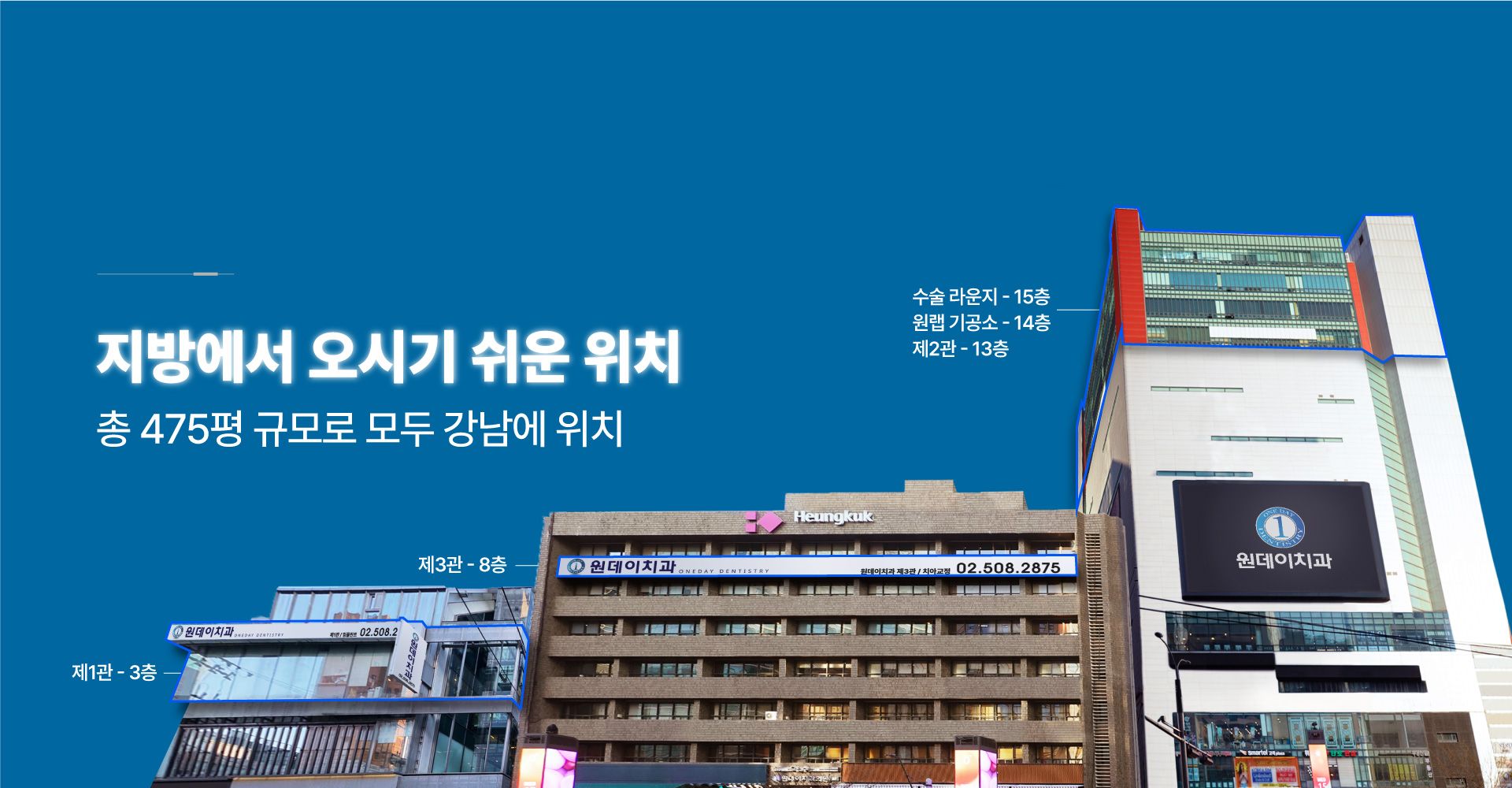
- 3Clinic buildings, 1,570 m²
- 0.01 mmT-Scan bite-force detail
Vice President, Korean Academy of Stomatognathic Function & Occlusion · author on T-Scan implant occlusion (IGI Global)
Periodontics & Gum Care: common questions
Is periodontal deep cleaning painful?
Can gum disease be cured?
How many visits does periodontal treatment take?
Can I have gum treatment during a short trip to Seoul?
Why do my gums bleed when I brush?
Who will treat my gums?
You may also want to read
Gum Recession
Gum recession treatment in Seoul: find the cause, then desensitising, bonding or gum grafting by our periodontics…
Learn more →Laser Gum Treatment
Laser gum treatment in Seoul with a water-drop (Waterlase-type) laser to support deep cleaning of inflamed pockets…
Learn more →Dental Cleaning
Dental cleaning in Seoul: scaling, polishing and gum check in one visit in Gangnam, with English, Chinese…
Learn more →Dental Implants
Dental implants in Seoul with OSSTEM or MegaGen, 3D CT planning and an in-house lab in Gangnam since 2002.
Learn more →Sensitive Teeth
Sensitive teeth treatment in Seoul: find the cause first, from gum recession to grinding, then fluoride, bonding…
Learn more →Family & General Dentistry
Family dentist in Seoul: check-ups, fillings, root canals, children's care and emergencies in Gangnam.
Learn more →Browse: Dental Implants · Cosmetic Dentistry · Orthodontics · Gum Care · General Dentistry · International Patients · Home
Get a dentist's opinion on WhatsApp
Send your question, photos or X-ray. We reply with a plan, timeline and estimate in English, Chinese, Japanese or Korean.