
Tooth Extraction in Seoul
Simple and surgical tooth extractions in Gangnam, planned with 3D CT and carried out by a dedicated oral surgery department, with the replacement option discussed before the tooth comes out.
- Since 2002
- 13 dentists
- In-house lab
- EN · 中文 · 日本語
What happens during a tooth extraction in Seoul?
A tooth extraction removes a tooth that cannot be saved. At Gangnam One Day Dental Clinic the dentist first checks the tooth and roots with X-rays or 3D CT, numbs the area with local anaesthetic, then removes the tooth simply or surgically. A simple extraction usually takes 20–40 minutes, and the socket typically closes over in 1–2 weeks.
Reviewed by Dr. Kim Jin-hwan , Chief Director · Updated October 5, 2026
When a tooth needs to come out
Extraction is the last option, not the first. Before recommending it, the dentist checks whether a root canal, a crown or gum treatment could keep the tooth. If the tooth is cracked below the gum, badly decayed, loose from advanced gum disease or blocking orthodontic movement, removal is usually the more predictable choice.
Gangnam One Day Dental Clinic has a dedicated oral and maxillofacial surgery department(Dr. Eom In-woong, Dr. Noh Kyu-sik and Dr. Oh Tae-kyung) among its 13 dentists, so routine and more complex extractions are handled within the same clinic.
- Tooth fractured below the gum line
- Decay too deep to restore
- Advanced gum disease with bone loss
- Crowding before orthodontic treatment
- Problem wisdom teeth
Simple vs surgical extraction
A simple extraction is used for a tooth that is fully visible and in one piece. The dentist loosens the tooth and lifts it out. A surgical extraction is used when a tooth is broken at the gum line, has curved roots or is impacted; a small gum opening is made and the tooth may be sectioned into pieces so less force is needed.
Which method you need is decided from imaging. 3D CT shows root shape and the distance to nerves and the sinus, which matters most for lower molars and wisdom teeth.
Not sure if this is right for you? Send a photo or X-ray — a dentist replies on WhatsApp in English, Chinese or Japanese.
Get a free opinionPlanning the gap before the extraction
If the tooth is visible when you smile or chew, it is worth deciding on the replacement before it is removed. Depending on the bone, an implant may be placed later, or in some cases straight away; see same-day implants. Where bone is thin, socket preservation or bone grafting may be suggested at the time of extraction.
The clinic's in-house Oneday Lab can make temporary teeth quickly, so a front-tooth gap does not have to be left open while you heal.
| Simple extraction | Surgical extraction | |
|---|---|---|
| Used for | Fully erupted, intact tooth | Broken, impacted or curved-root tooth |
| Typical chair time | 20–40 min | 40–60 min or more |
| Stitches | Usually not needed | Often needed |
| Swelling | Mild, 1–3 days | Moderate, peaks day 2–3 |
| Normal routine | Next day for most | Usually 2–5 days |
How it works at Oneday Dental
- Before visit
Send X-ray or photos
Send any existing X-ray or clear photos on WhatsApp so the team can give an initial view and estimate.
- Day 1
Exam and imaging
The dentist examines the tooth and takes an X-ray or 3D CT to check roots, nerves and the sinus.
- Day 1
Extraction
After local anaesthetic, the tooth is removed simply or surgically. Gauze is placed and stitches are added if needed.
- Days 1–7
Healing at home
You follow written aftercare: bite on gauze, avoid smoking and straws, eat soft food and take prescribed medication.
- About 1 week
Check and next step
Stitches are removed if used, healing is checked and the plan for an implant, bridge or denture is confirmed.
Things to know before you decide
- Dry socket can occur, especially in smokers; it causes throbbing pain around day 3–4 and is treated with a medicated dressing.
- Lower back teeth sit near the nerve; 3D CT is used to judge this risk before surgery.
- Upper molar roots can sit close to the sinus; a small sinus opening is uncommon but possible.
- Patients on blood thinners or bisphosphonates must tell the dentist beforehand, as timing or approach may change.
- Removing a tooth without replacing it can let neighbouring teeth drift over time.
Experience you can check
- 2002Founded in Gangnam — 24 years
- 13Dentists in 5 departments
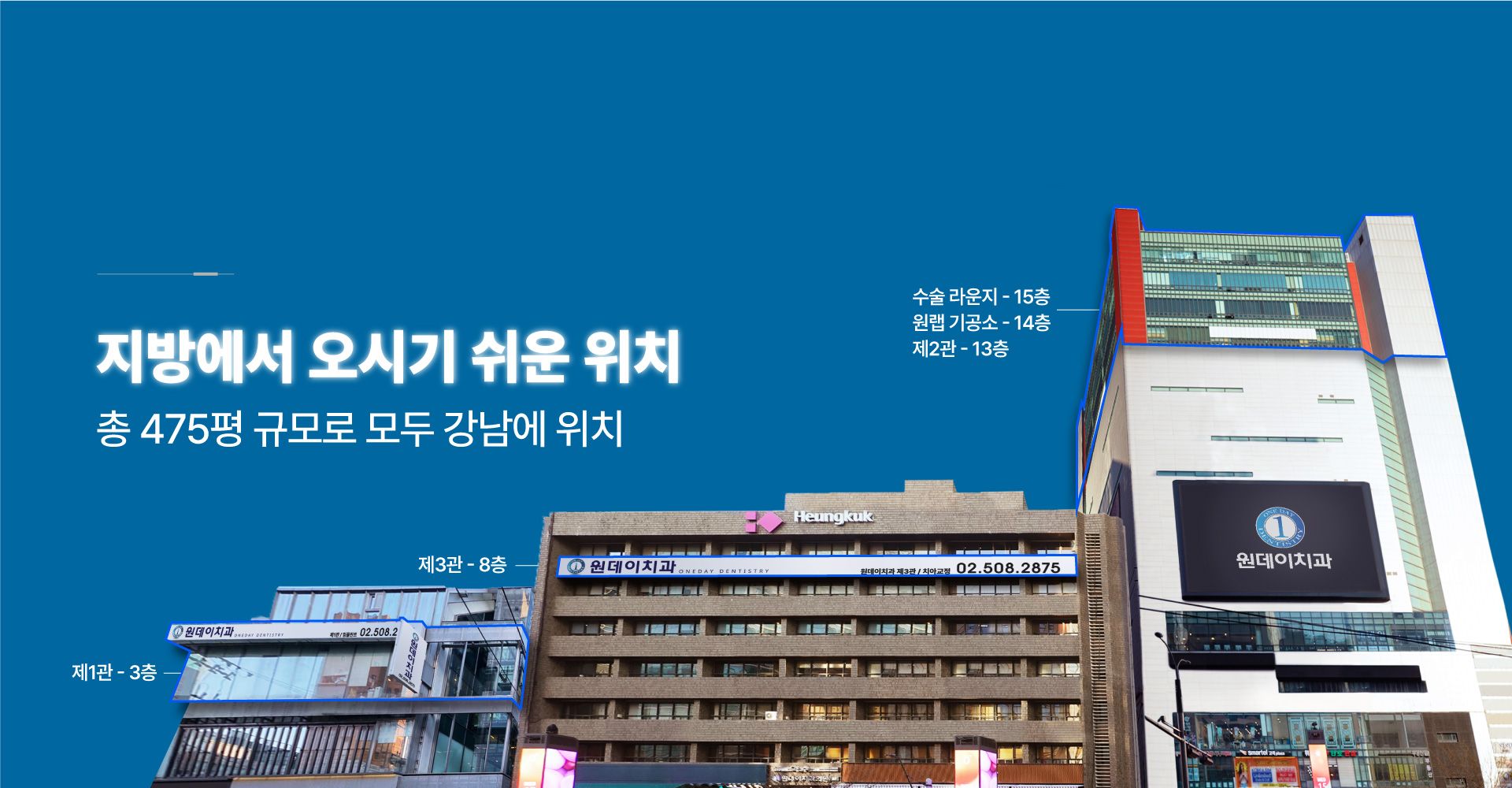
- 3Clinic buildings, 1,570 m²
- 0.01 mmT-Scan bite-force detail
Vice President, Korean Academy of Stomatognathic Function & Occlusion · author on T-Scan implant occlusion (IGI Global)
Tooth Extractions: common questions
Does a tooth extraction hurt?
How much does a tooth extraction cost in Seoul?
Can I get an implant on the same day as the extraction?
How long until I can eat normally after an extraction?
Can I fly home after a tooth extraction in Korea?
Do I need to replace an extracted tooth?
You may also want to read
Wisdom Teeth Removal
Wisdom teeth removal in Seoul for erupted and impacted teeth, planned with 3D CT by an oral surgery department…
Learn more →Single-Tooth Implant
Single tooth implant in Korea: implant vs bridge compared, OSSTEM or MegaGen, crown made in our Gangnam lab.
Learn more →Same-Day Implants
Same-day implants in Seoul: extraction, implant and temporary tooth in one visit when bone allows.
Learn more →Bone Grafting
Bone grafting in Gangnam, Seoul: socket preservation, GBR, ridge augmentation and sinus lift, planned on 3D CT.
Learn more →Sedation Dentistry
Sedation dentistry in Korea: IV sleep sedation for implant surgery in Gangnam, with a pre-sedation health check…
Learn more →Emergency Dentist
Emergency dentist in Seoul for toothache, broken or knocked-out teeth, swelling and lost crowns.
Learn more →Browse: Dental Implants · Cosmetic Dentistry · Orthodontics · Gum Care · General Dentistry · International Patients · Home
Get a dentist's opinion on WhatsApp
Send your question, photos or X-ray. We reply with a plan, timeline and estimate in English, Chinese, Japanese or Korean.